
How do diaspora influence and international touring impact an artist’s legendary status?

Jamaican artists achieve legendary status through local respect, diaspora influence, and international touring. This article explores how global communities amplify reggae and dancehall legends.
Introduction
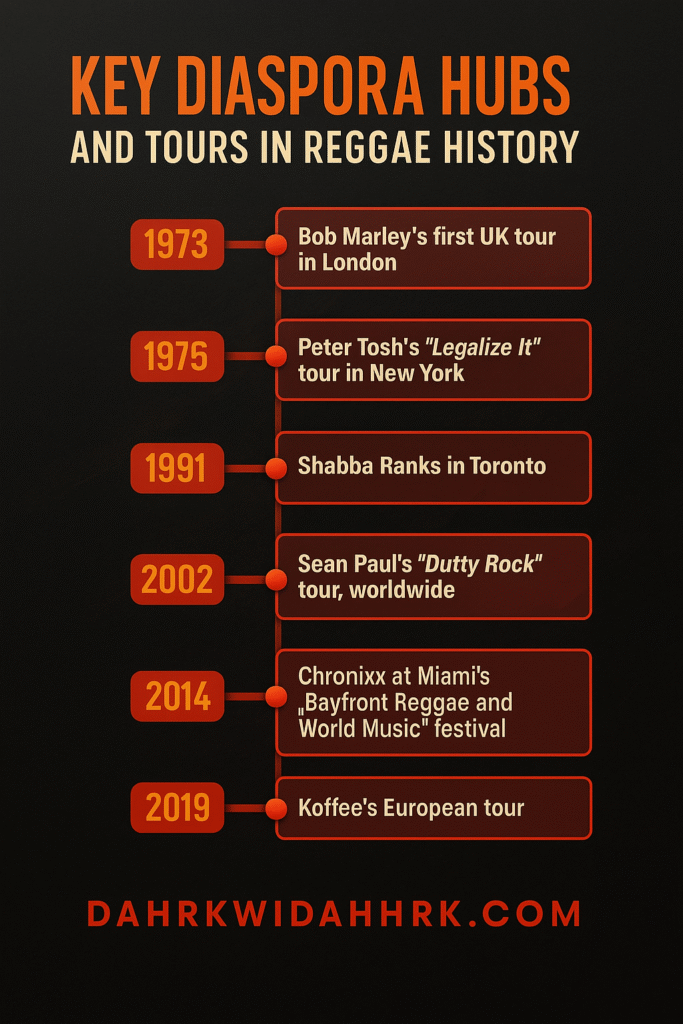
In Jamaica, legendary status begins at yard — but it rarely ends there. For reggae and dancehall artists, the diaspora and international touring provide the pathways that transform national recognition into global reverence. From Marley’s tours across Europe to Chronixx electrifying festivals worldwide, diaspora audiences and global tours have ensured that Jamaican legends are not only remembered in Kingston but celebrated in London, New York, Toronto, Miami, and beyond.
Direct Answer
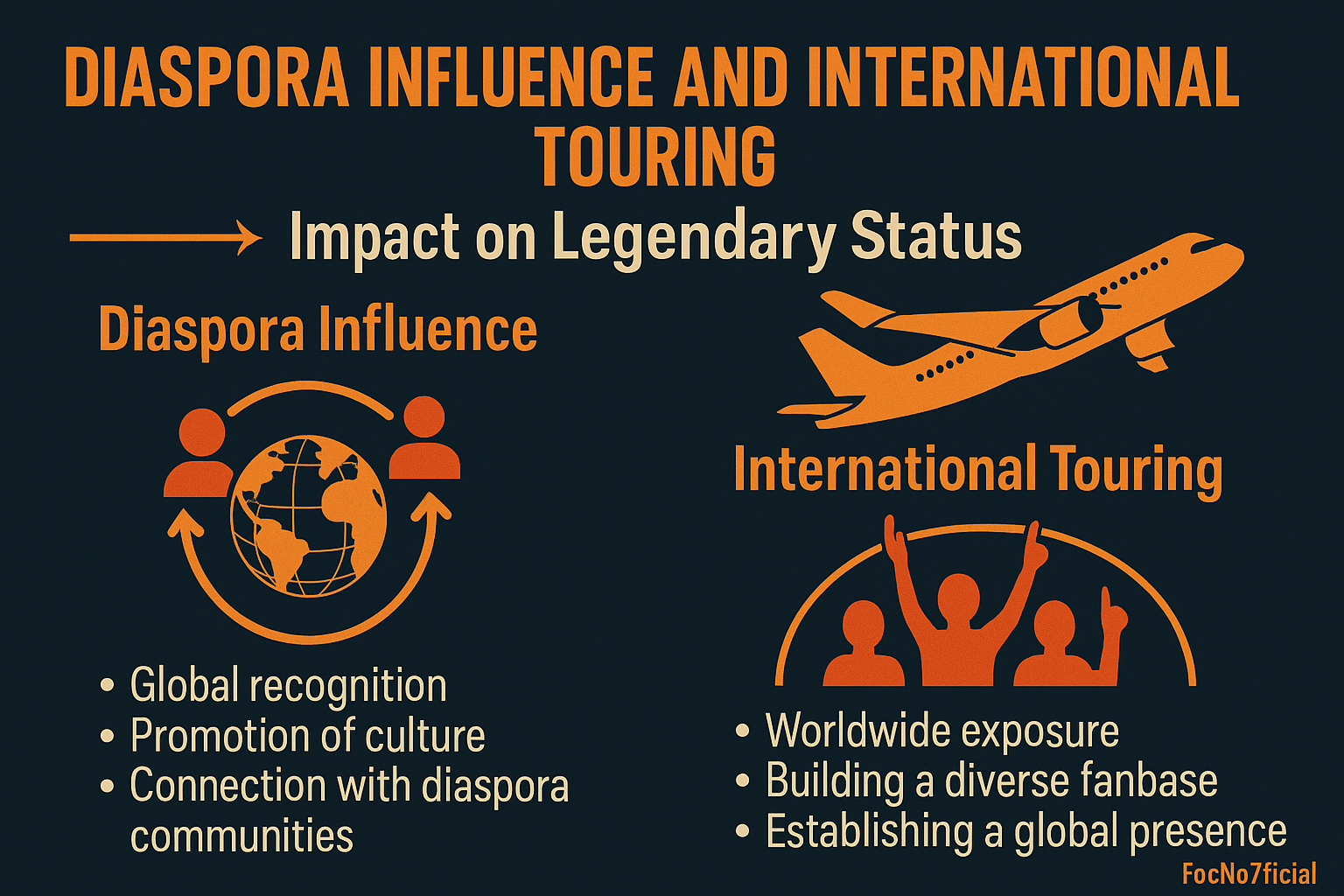
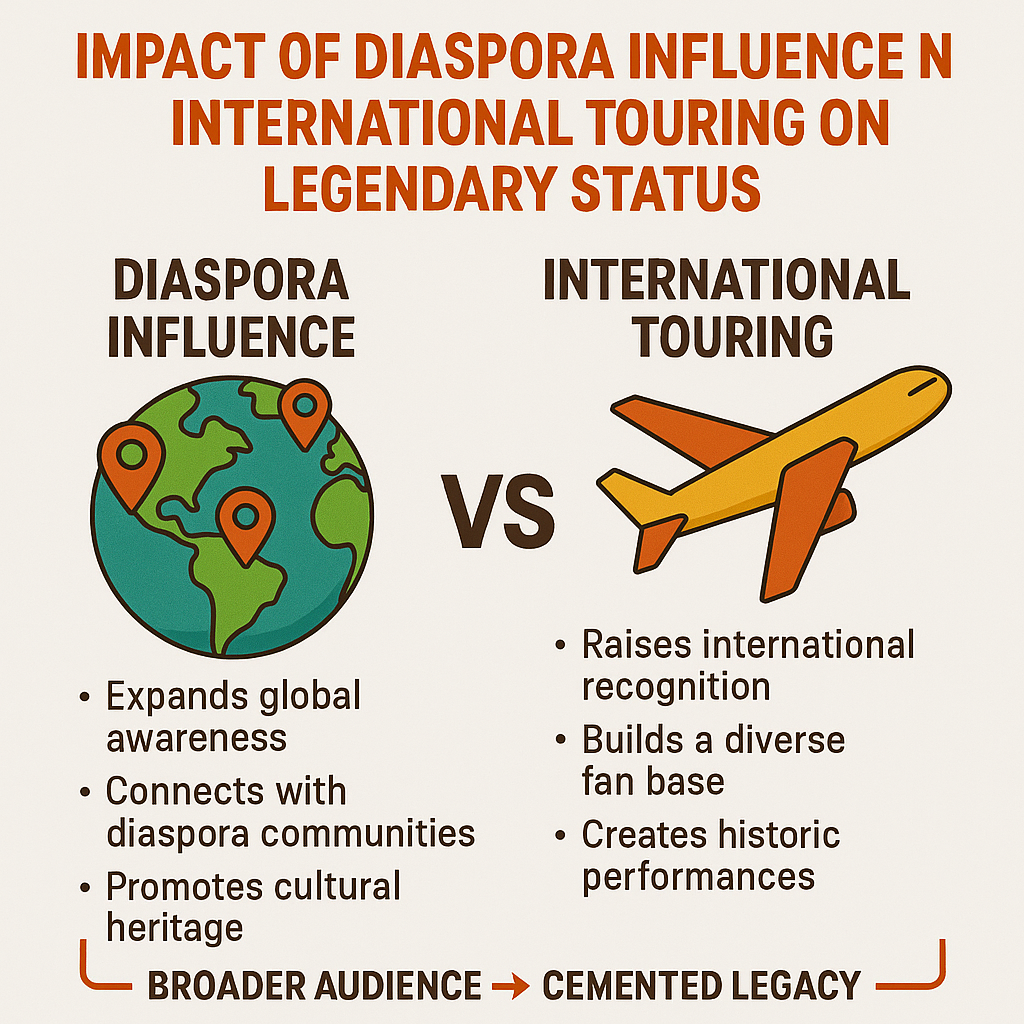
Diaspora influence and international touring amplify an artist’s legendary status by expanding audiences, securing cultural validation across borders, and ensuring longevity through global memory.
- Diaspora hubs such as London, New York, and Toronto spread Jamaican music into new communities.
- International touring builds credibility: legends are those who can carry Jamaica’s sound to the world and still command respect at yard.
- Together, diaspora and tours make legends not just national treasures but global cultural icons.
Diaspora as Amplifier
Diaspora communities are cultural embassies for Jamaican music. In the 1970s, London’s sound system culture spread reggae throughout the UK. New York clubs fused reggae with hip hop. Toronto and Miami nurtured strong Caribbean followings. These diaspora hubs elevate Jamaican artists by giving them spaces where their music resonates with Caribbean migrants while attracting wider audiences.
International Touring as Legitimacy
Touring is a crucible for legendary status. Marley’s Exodus tours in Europe turned him into a prophet of global justice. Peter Tosh’s fiery stage presence cemented his legendary image. In later decades, Shabba Ranks, Beenie Man, and Sean Paul used tours to move from Jamaican stardom to international icons. Chronixx and Koffee now headline global festivals, signaling the rise of new legends.
Case Studies
- Bob Marley: From Kingston to global stages, touring Europe and Africa elevated him from Jamaican icon to world legend.
- Dennis Brown: Beloved at yard, but limited touring curtailed his global legendary recognition.
- Shabba Ranks: Iconic in the US during the 1990s, diaspora-driven fame ensured his mark, even as his legendary status is debated.
- Sean Paul: International tours, combined with diaspora communities, made him one of dancehall’s most globally recognized icons.
- Chronixx & Koffee: Festival circuits in Europe and North America cement their potential as future legends.
Local vs Diaspora Validation
In Jamaica, grassroots respect is critical. An artist cannot be crowned a legend abroad without validation at home. Yet diaspora audiences often amplify local voices, bringing them to global ears. The balance of local authenticity and international acceptance defines who becomes a Jamaican legend.
Future: The Digital Diaspora
Today, diaspora influence is not just physical but digital. TikTok, Spotify, and YouTube amplify Jamaican culture globally. A song that takes off in London or New York can ripple back to Jamaica. Touring is now supplemented by online “digital touring,” with diaspora communities driving visibility.
Conclusion — From Yard to the World
Legends are born in Jamaica but crowned on the road. Diaspora hubs act as amplifiers, and international tours legitimize artists as cultural ambassadors. While icons may dazzle charts, legends sustain their voices across communities and generations, carried by Jamaicans at home and abroad.
References
- Bradley, L. (2000). Bass Culture: When Reggae Was King. Penguin.
- Cooper, C. (2004). Sound Clash: Jamaican Dancehall Culture at Large. Palgrave Macmillan.
- Gilroy, P. (1993). The Black Atlantic: Modernity and Double Consciousness. Harvard University Press.
- UNESCO. (2018). Reggae music of Jamaica inscribed on the Representative List of the Intangible Cultural Heritage of Humanity.